
Welcome To Osage County
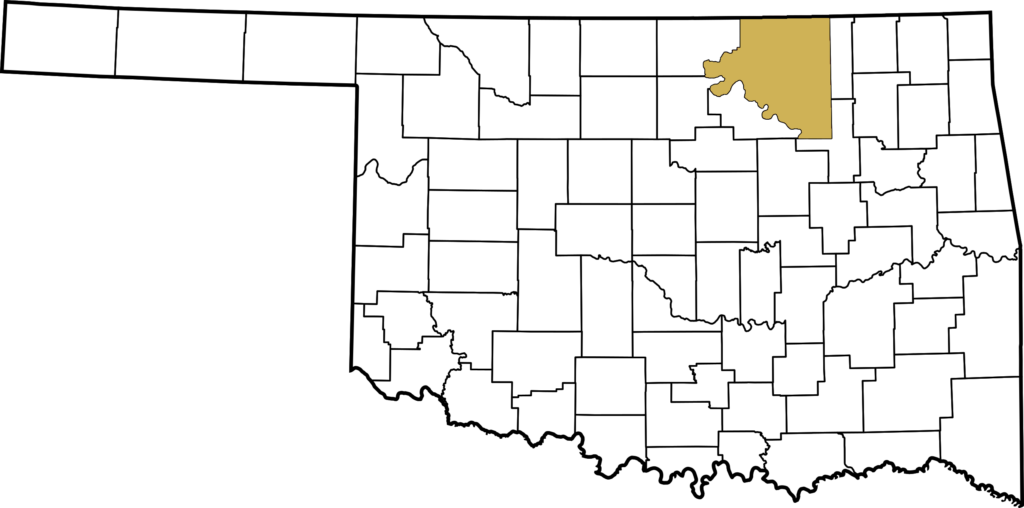
Oklahoma’s Largest County
At the Osage County Sheriff’s Office, our mission is to provide a solid foundation on which the residents of Osage County can thrive. We are committed to building public trust and fostering safe, secure communities through professional, high-quality professional law enforcement.
Osage County holds a unique place in Oklahoma’s history and geography. As the state’s largest county by area, it was established in 1907 when Oklahoma gained statehood. The county’s name and heritage are deeply tied to the federally recognized Osage Nation, whose reservation boundaries are coextensive with the county itself. This land became the Osage Nation Reservation in the 19th century following the relocation of the Osage people from Kansas.
The county seat, Pawhuska, is one of the first three towns founded in the county and remains a hub of history and culture. As of the 2020 Census, Osage County had a population of 45,818 residents.
According to the U.S. Census Bureau, the county spans an impressive 2,304 square miles (5,970 km²), with 2,246 square miles (5,820 km²) of land and 58 square miles (150 km²) of water, accounting for 2.5% of its total area. Much of the landscape is part of the Osage Plains, characterized by open prairie, while the eastern portion features the rolling Osage Hills—an extension of Kansas’ Flint Hills. Nature enthusiasts can also explore the renowned Tallgrass Prairie Preserve, located just north of Pawhuska, where remnants of the once-vast tallgrass ecosystem are carefully preserved.
MEET OUR LEADERS
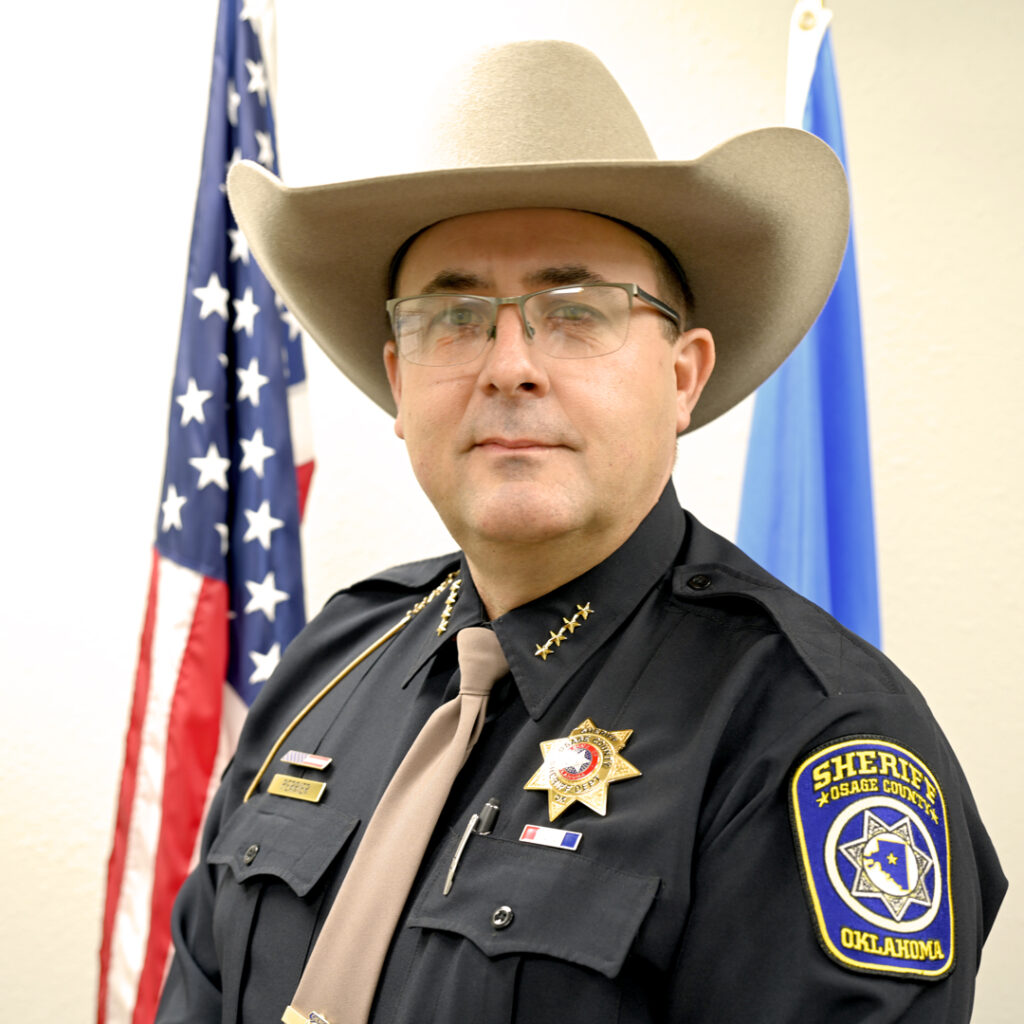
Bart Perrier
Sheriff
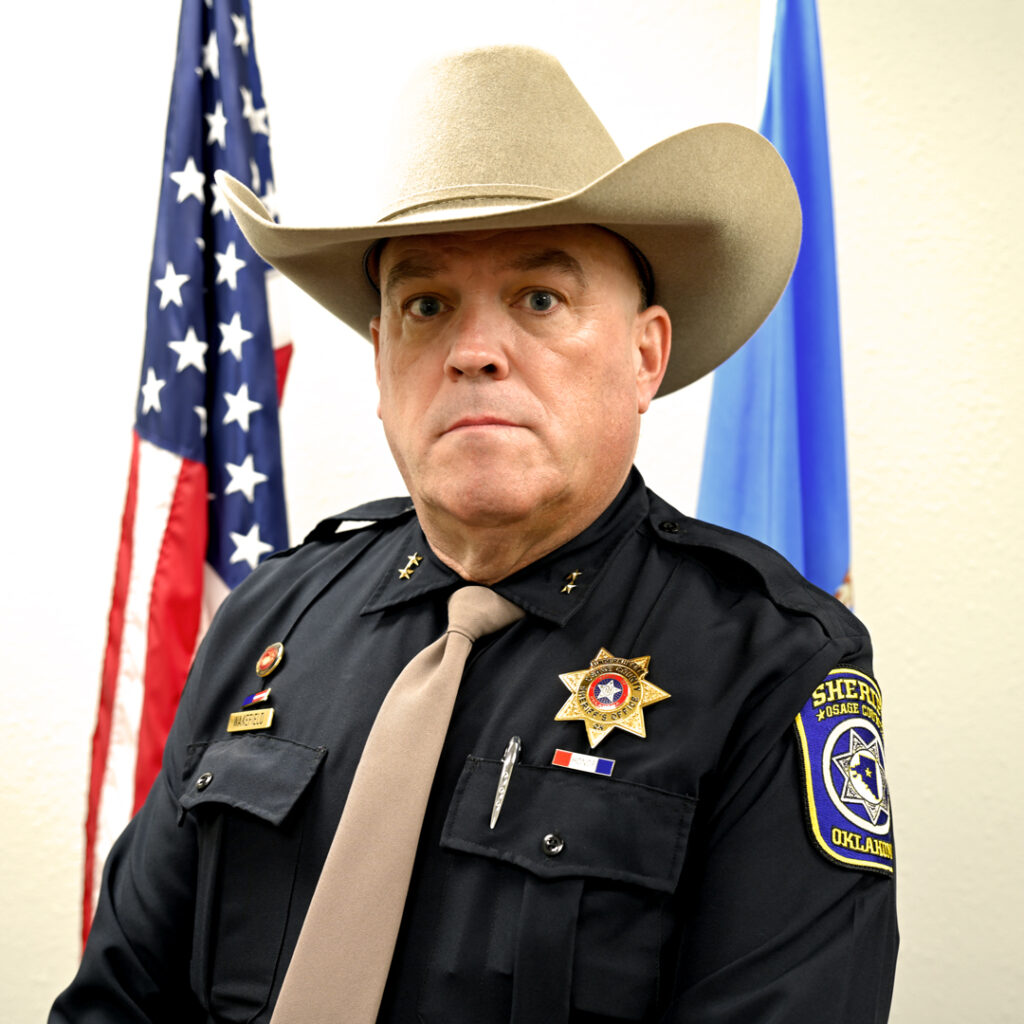
Billy Wakefield
Undersheriff
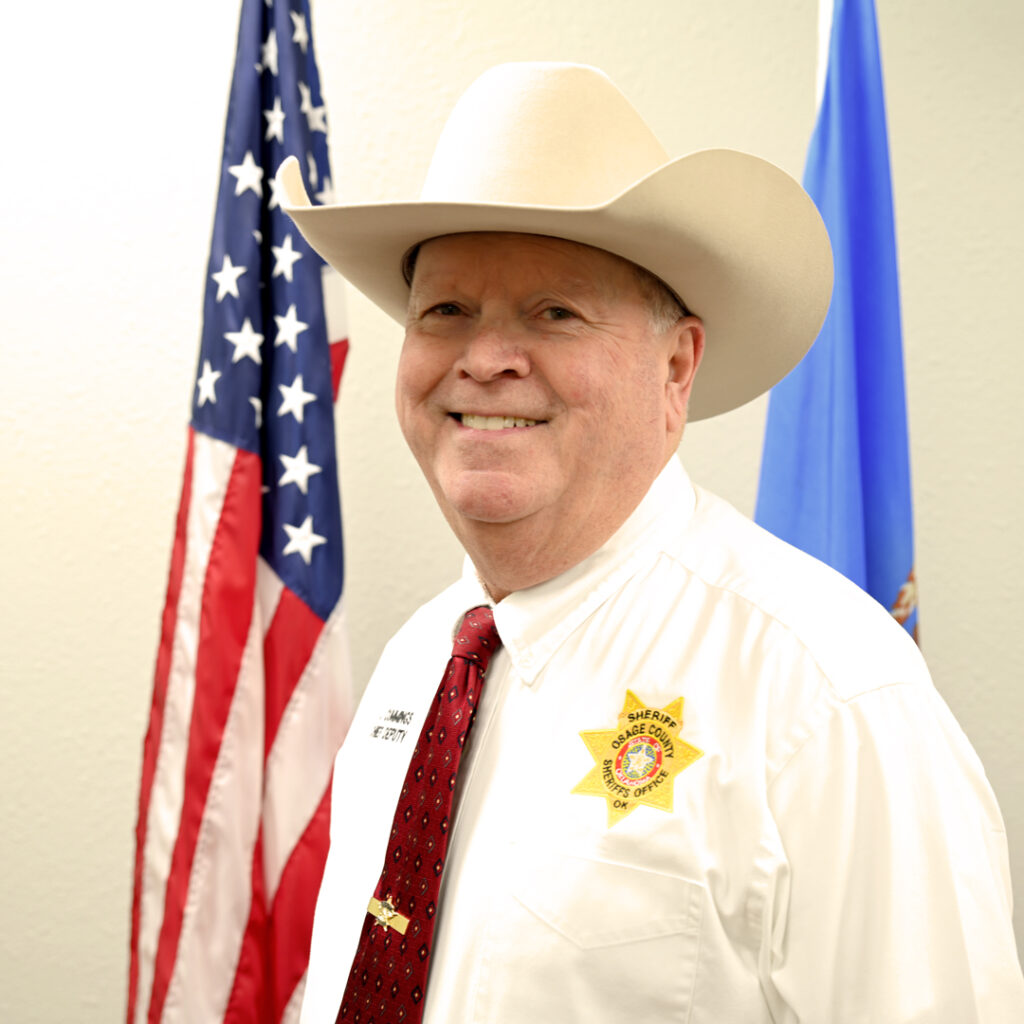
John Cummings
Chief Deputy
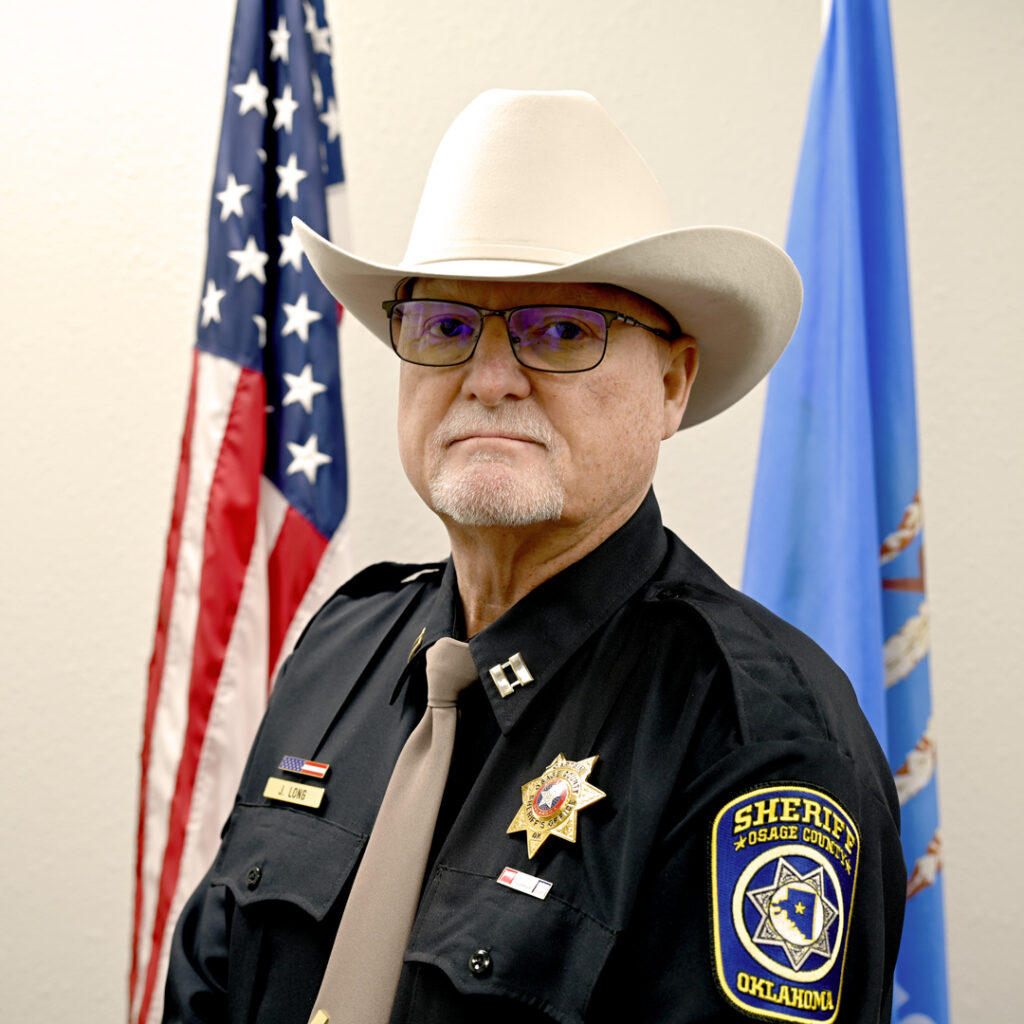
Jay Long
Jail Captain
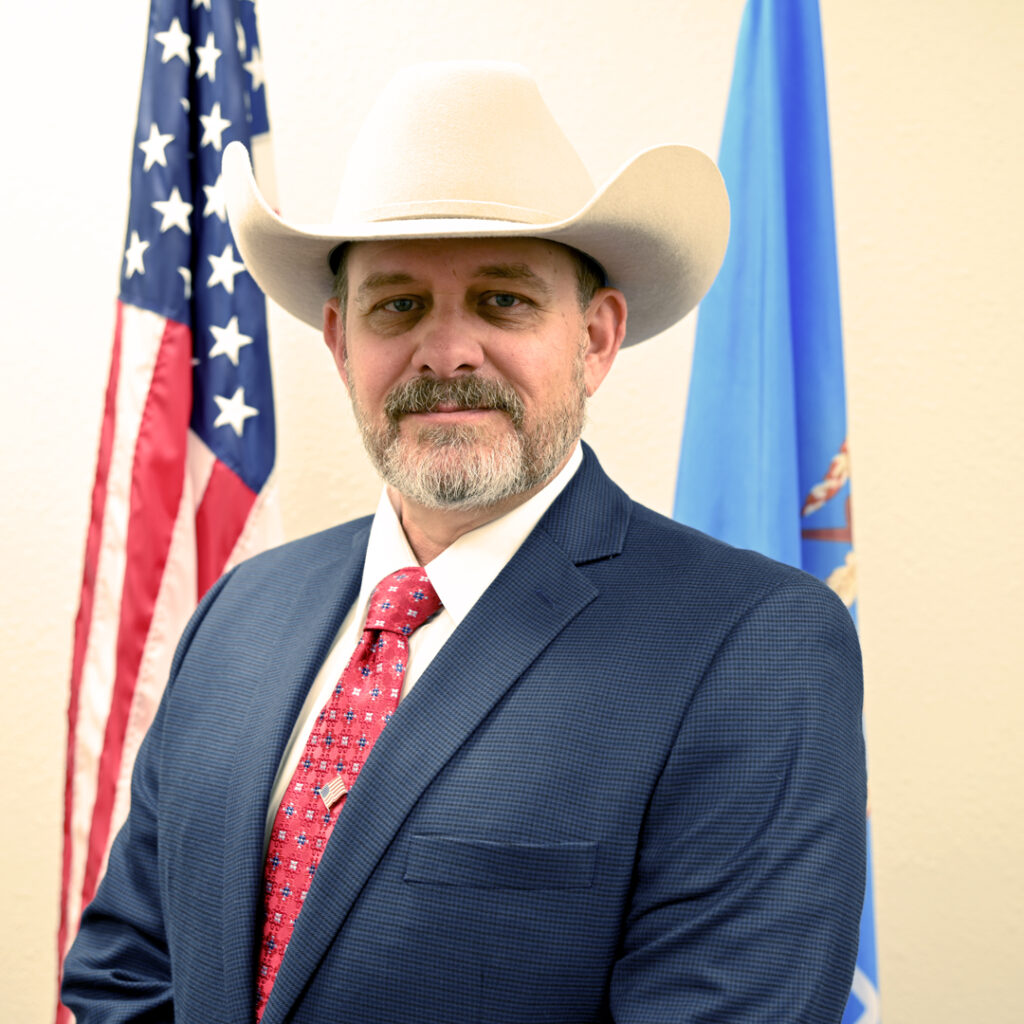
Shane Rhames
Investigations Captain
OUR LAW ENFORCEMENT TEAM
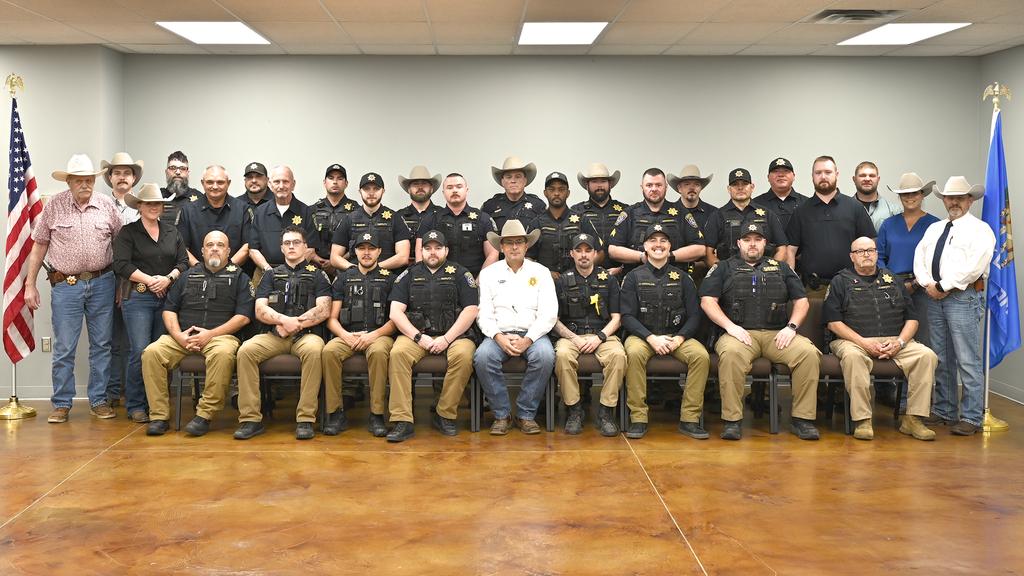
Osage County Sheriff’s Office
September 2026
𝐑𝐄𝐃 𝐑𝐈𝐁𝐁𝐎𝐍 𝐖𝐄𝐄𝐊 | 𝐎𝐂𝐓𝐎𝐁𝐄𝐑 𝟐𝟑–𝟑𝟏, 𝟐𝟎𝟐𝟔
Red Ribbon Week is a nationwide campaign dedicated to promoting drug-free lifestyles and educating young people about the dangers of drug abuse.
The Osage County Sheriff’s Office is proud to recognize Red Ribbon Week and encourage our youth to make healthy choices, resist peer pressure, and remain drug-free.
Drug prevention begins with education, strong families, supportive schools, and communities working together. Our deputies and School Resource Officers are committed to helping young people understand the dangers of drugs, including fentanyl and other dangerous substances.
Together, we can build a safer, healthier, drug-free future for the youth of Osage County.
#RedRibbonWeek #DrugFreeOsageCounty #OsageCountySheriffsOffice #DrugPrevention #ProtectingOurYouth …
0 CommentsComment on Facebook
𝐎𝐬𝐚𝐠𝐞 𝐂𝐨𝐮𝐧𝐭𝐲 𝐂𝐫𝐢𝐦𝐞 𝐀𝐫𝐜𝐡𝐢𝐯𝐞𝐬
𝐓𝐡𝐞 𝐒𝐡𝐨𝐭 𝐚𝐭 𝐓𝐮𝐫𝐤𝐞𝐲 𝐂𝐫𝐞𝐞𝐤 — 𝐓𝐡𝐞 𝐃𝐞𝐚𝐭𝐡 𝐨𝐟 𝐖𝐚𝐥𝐭𝐞𝐫 𝐂𝐚𝐧𝐧𝐚𝐝𝐲 (𝟏𝟗𝟐𝟗)
In the spring of 1929, while Osage County Deputies were still wrestling with one unsolved killing in the western part of the county, another death shattered the quiet of the Wildhorse settlement southeast of Hominy.
On Saturday evening, April 27, 1929, 22-year-old Walter Leo Cannady was brought into Hominy, dead from a rifle wound in his back. He had been alive only hours earlier.
𝗔 𝗕𝗼𝗱𝘆 𝗮𝘁 𝘁𝗵𝗲 𝗙𝗶𝗹𝗹𝗶𝗻𝗴 𝗦𝘁𝗮𝘁𝗶𝗼𝗻
It was Maynard Madden, a 21-year-old Hominy youth, who carried Cannady’s body from the Turkey Creek area—some 25 miles southeast of town—and left it at a filling station along the Hominy-Skiatook highway before notifying officers.
Madden told authorities it had been an accident.
His first version was simple: he and Cannady were driving near Turkey Creek when they spotted a wolf. Cannady stepped from the car with a rifle to shoot it. A shot rang out. When Madden turned, his friend was on the ground.
But Chief of Police Lon Dabney noted something troubling almost immediately. The bullet had entered near the center of Cannady’s back and exited near the shoulder. It was not the wound of a man who had shot himself.
𝗦𝘁𝗼𝗿𝗶𝗲𝘀 𝗧𝗵𝗮𝘁 𝗦𝗵𝗶𝗳𝘁𝗲𝗱
By the next morning, Madden’s account had changed. This time, he admitted the two young men had been working at a liquor still hidden along Turkey Creek. Cannady, he said, had picked up the rifle to shoot at a wolf when it discharged unexpectedly.
Officers were skeptical.
Madden was placed under arrest, and when pressed further, he struggled even to relocate the supposed scene of the shooting. It took another day of searching with Sheriff Ben McDonald, deputies George Clower, Fred Graves, and John Mizer before the truth began to surface.
Hidden in a hollow under a camouflaged tent was a large moonshine operation—a 250-gallon moonshine still, more than thirty barrels of mash, set and ready to run.
There was no wolf.
𝗧𝗵𝗲 𝗖𝗼𝗿𝗼𝗻𝗲𝗿’𝘀 𝗩𝗲𝗿𝗱𝗶𝗰𝘁
A coroner’s jury convened in Hominy and returned a stark finding: Walter Cannady had been murdered by a rifle shot fired by an unknown person. Cannady—born September 29, 1906, in Kansas—had lived near Hominy for twelve years with his father, Albion Benjamin Cannady. He worked in the oil fields and resided near Wildhorse, not far from where the still was discovered.
He was buried in Hominy Cemetery, funeral services conducted by Rev. Hildebrand of the Christian Church. He was twenty-two years old.
𝗔 𝗠𝗮𝗻𝗵𝘂𝗻𝘁 𝗮𝗻𝗱 𝗮 𝗣𝗿𝗶𝘀𝗼𝗻 𝗥𝗲𝗰𝗼𝗿𝗱
In the days following the coroner’s verdict, officers cast a wide net. Several men were investigated and initially taken into custody as murder suspects. Among them was William N. “Bill” Madden, Maynard’s father, along with Henderson “J. H.” Tomlin and Roscoe “Slim” McMurray, all arrested after the discovery of the concealed liquor still near Turkey Creek. Federal liquor charges were filed as authorities worked to determine whether the killing was tied to the moonshine operation.
Suspicion soon centered more sharply on Bill Moore, a known offender who disappeared from Hominy immediately after Cannady’s death. Moore carried a heavy record and a string of aliases—among them R. T. Graham and Hal Buie.
Records showed a 1911 conviction for bank robbery in Roger Mills County, in western Oklahoma, followed by a later conviction in 1925 for Horse theft in Osage County.
A murder warrant was issued.
For weeks, posses searched wooded tracts and isolated farmhouses south of Hominy. Reports surfaced that Moore was hiding in the timber, slipping from place to place ahead of the law. The search finally ended in Borger, Texas, where Moore was arrested. Sheriff Ben McDonald and Deputy Bill Parker traveled there to return him to Osage County. But even with Moore in custody and other suspects behind bars, the case was far from settled.
𝗧𝗵𝗲 𝗙𝗶𝗻𝗮𝗹 𝗖𝗼𝗻𝗳𝗲𝘀𝘀𝗶𝗼𝗻
In time, it was Maynard Madden who broke. In a signed statement, he admitted he had fired the fatal shot. He claimed it was accidental—that he had pointed the rifle at Cannady “to make him dance,” and the gun discharged unexpectedly.
The bullet had entered the young oil worker’s back. Murder charges against Moore were dropped. Federal charges for operating the whiskey still proceeded. Moore and Madden’s father, William N. Madden, each drew three-year sentences in Leavenworth. Others faced liquor charges.
Maynard Madden received six months in the Osage County jail for the liquor case. Soon after, first-degree murder charges were filed against him based on his confession.
Authorities remained openly doubtful of his explanation. The wound told a different story than the one Madden struggled to maintain through multiple versions. Yet the historical record shows no lengthy penitentiary term, as charges were finally dismissed for murder. Walter Cannady’s life ended in a hollow along Turkey Creek. Maynard Madden’s did not.
𝗧𝗵𝗲 𝗟𝗼𝗻𝗴 𝗦𝗵𝗮𝗱𝗼𝘄 𝗼𝗳 𝗬𝗼𝘂𝘁𝗵
Maynard Paul Madden was born in February 1908 in Prue, Oklahoma, and grew up with his father near Wildhorse, located between Hominy and Skiatook. Thirteen years after the shooting, in August 1942, he enlisted in the United States Army during World War II. He received an honorable discharge in October 1945.
He returned home to Osage County. For decades, he lived quietly in the same land where the tragedy had unfolded. On May 20, 1980, he was injured in an automobile accident and died nine days later in Tulsa at the age of seventy-two. He was buried in Hominy Cemetery.
The boy once led officers to a camouflaged still in a Turkey Creek hollow. The man later wore his country’s uniform in wartime. History does not always divide lives cleanly into villain and hero. Sometimes it records a single violent spring afternoon—and then decades of ordinary days that follow. But along Turkey Creek, where mash once fermented in hidden barrels, and a rifle cracked in the distance, one truth remains: Walter Leo Cannady never came home. …
0 CommentsComment on Facebook
𝐏𝐑𝐄𝐒𝐒 𝐑𝐄𝐋𝐄𝐀𝐒𝐄 | 𝐎𝐒𝐀𝐆𝐄 𝐂𝐎𝐔𝐍𝐓𝐘 𝐒𝐇𝐄𝐑𝐈𝐅𝐅'𝐒 𝐎𝐅𝐅𝐈𝐂𝐄
𝐎𝐒𝐀𝐆𝐄 𝐂𝐎𝐔𝐍𝐓𝐘 𝐃𝐄𝐏𝐔𝐓𝐈𝐄𝐒 𝐀𝐑𝐑𝐄𝐒𝐓 𝐂𝐎𝐍𝐕𝐈𝐂𝐓𝐄𝐃 𝐅𝐄𝐋𝐎𝐍 𝐅𝐎𝐋𝐋𝐎𝐖𝐈𝐍𝐆 𝐑𝐄𝐏𝐎𝐑𝐓𝐄𝐃 𝐊𝐈𝐃𝐍𝐀𝐏𝐏𝐈𝐍𝐆 𝐀𝐍𝐃 𝐃𝐄𝐀𝐓𝐇 𝐓𝐇𝐑𝐄𝐀𝐓𝐒
October 22, 2026
OSAGE COUNTY, OKLAHOMA – On October 21, 2026, deputies with the Osage County Sheriff's Office arrested a convicted felon following a reported kidnapping involving a Kansas woman who was allegedly held against her will and threatened with death at a rural Osage County residence.
At approximately 2:42 a.m., the Sheriff's Office received information from the Arkansas City, Kansas Police Department regarding a woman who had sent messages indicating she was being held against her will.
Deputies located the woman at a residence on George Braden Road near Ponca City, within Osage County and safely removed her from the residence.
Investigators learned the victim had met the suspect, Zachary Troy Mauk, through Facebook Dating. After communicating for approximately one week, Mauk traveled to Kansas, picked her up, and brought her to his Oklahoma residence.
According to the victim, when she attempted to leave on October 20, Mauk became violent and threatened to kill her and members of her family. When Mauk's father attempted to help the woman leave in a pickup, Mauk allegedly jumped onto the vehicle, broke out the rear window, and attempted to forcibly remove her. The victim also reported being threatened with a handgun.
Investigators discovered Mauk had a prior felony conviction for Attempted First-Degree Murder in North Carolina in 2016.
At approximately 7:50 a.m. on October 21, deputies executed a search warrant at Mauk's residence and recovered three firearms from his bedroom.
Mauk was arrested and transported to the Osage County Jail on the following charges:
• Domestic Abuse – 21 O.S. § 644(C)
• Kidnapping – 21 O.S. § 741
• Possession of a Firearm After Former Felony Conviction – 21 O.S. § 1283(A)
• Planning or Endeavoring to Perform an Act of Violence – 21 O.S. § 1378(A)
This is an arrest not a conviction. …
47 CommentsComment on Facebook
𝐄𝐌𝐏𝐋𝐎𝐘𝐄𝐄 𝐇𝐈𝐆𝐇𝐋𝐈𝐆𝐇𝐓 | 𝐄𝐗𝐄𝐂𝐔𝐓𝐈𝐕𝐄 𝐀𝐃𝐌𝐈𝐍𝐈𝐒𝐓𝐑𝐀𝐓𝐈𝐕𝐄 𝐀𝐒𝐒𝐈𝐒𝐓𝐀𝐍𝐓 𝐀𝐂𝐇𝐒𝐀𝐇 𝐄𝐋𝐋𝐈𝐎𝐓𝐓
This month, the Osage County Sheriff’s Office is proud to recognize Executive Administrative Assistant Achsah Elliott, whose years of service, institutional knowledge, and wide-ranging responsibilities have made her an important part of the daily operation of the Sheriff’s Office.
Achsah’s history with OCSO began on August 4, 2003, when she joined the Sheriff’s Office as a member of the clerical and administrative staff. During her first decade with the agency, Achsah served under Sheriff Russell Cottle, Sheriff Wes Penland, and Sheriff Ty Koch, remaining with the office until June 2013.
During those years, Achsah handled numerous administrative responsibilities, including employee timekeeping, transcribing statements, maintaining records, and assisting with the many day-to-day duties necessary to keep the Sheriff’s Office operating.
But Achsah’s service was not limited to working behind a desk.
In October 2005, she completed her Reserve CLEET certification and became an OCSO Reserve Deputy, volunteering her time to assist the Patrol Division and working special events throughout Osage County. Even after leaving her full-time position with the Sheriff’s Office in 2013, Achsah maintained her connection to law enforcement and resumed serving as an OCSO Reserve Deputy in 2018.
In August 2023, Achsah returned to the Sheriff’s Office full time as Executive Administrative Assistant under Sheriff Eddie Virden. She continues in that position today under Sheriff Bart Perrier, carrying responsibilities that touch nearly every division and employee within the organization.
Achsah helps oversee the Sheriff’s Office’s human resources, payroll, purchasing, accounts payable, grants, and overall budget administration. From managing millions of dollars in public funds and monitoring expenditures to purchasing equipment, administering grant programs, and making sure employees get paid, Achsah is involved in virtually every aspect of the business side of the Sheriff’s Office.
Her position requires organization, confidentiality, attention to detail, and constant coordination with the Sheriff, command staff, county offices, vendors, employees, and numerous outside agencies.
While deputies, detention officers, and dispatchers are often the most visible parts of a Sheriff’s Office, an organization of this size cannot function without dedicated people working behind the scenes. Achsah is one of those people.
As Executive Administrative Assistant, she serves as the right hand of the Sheriff on many administrative and financial matters and is one of the key members of Sheriff Perrier’s leadership team. Her knowledge of the organization, willingness to take on difficult tasks, and years of experience make her a valuable resource throughout the Sheriff’s Office.
From administrative employee to Reserve Deputy to Executive Administrative Assistant, Achsah’s history with OCSO now spans more than two decades and multiple generations of leadership.
Please join us in recognizing Executive Administrative Assistant Achsah Elliott and thanking her for her continued dedication to the Osage County Sheriff’s Office and the citizens of Osage County.
#EmployeeHighlight #OCSO #OsageCounty #PublicService #BehindTheBadge …
44 CommentsComment on Facebook
Here is our monthly stats for September! …
2 CommentsComment on Facebook
𝐒𝐓𝐀𝐍𝐃𝐈𝐍𝐆 𝐓𝐎𝐆𝐄𝐓𝐇𝐄𝐑 | 𝐎𝐊𝐋𝐀𝐇𝐎𝐌𝐀 𝐒𝐇𝐄𝐑𝐈𝐅𝐅𝐒’ 𝐀𝐒𝐒𝐎𝐂𝐈𝐀𝐓𝐈𝐎𝐍
The Osage County Sheriff’s Office and Sheriff Bart Perrier proudly stand with the Oklahoma Sheriffs’ Association (OSA).
The OSA serves as a unified voice for Sheriffs across Oklahoma, representing our interests at the State Capitol while providing valuable resources, legislative advocacy, professional development, and a strong statewide network.
The association plays an important role in strengthening the Office of Sheriff and ensuring we have the tools and resources necessary to better serve our citizens.
A stronger Oklahoma Sheriffs’ Association means stronger sheriffs’ offices, safer communities, and ultimately, a stronger Osage County.
Learn more about the Oklahoma Sheriffs’ Association:
🌐 …
Oklahoma Sheriffs' Association
www.oklahomasheriffs.org
The Oklahoma Sheriffs’ Association provides support, training, and resources to sheriffs across Oklahoma. Join us in supporting law enforcement and public safety in Oklahoma.1 CommentsComment on Facebook